Electric mobility Infrastructure Climate protection & Transport
Electric Mobility in 2025: Year in Review
The past year has seen positive developments in the field of electric mobility. While demand for gasoline- and diesel-powered passenger cars declined in 2025, the number of electric and hybrid passenger cars rose significantly again: The number of passenger cars with alternative powertrains (electric, hybrid, plug-in, fuel cell, gas, hydrogen) rose by 25.5 percent compared to the previous year. The expansion of charging stations also continued to advance last year.
Despite a difficult economic situation, the overall German passenger car market grew by 1.4 percent in 2025 to approximately 2.86 million units.
In 2025, 545,142 new battery electric vehicles (BEVs) were registered. With a market share of 19.1 percent, this represents a 43.2 percent increase over the previous year. Hybrid vehicles achieved a market share of 39.5 percent, driven by 19.0 percent growth. By contrast, the registration shares for gasoline-powered passenger cars (27.2 percent) and diesel-powered passenger cars (13.8 percent) were below the previous year’s levels.
Electric powertrains on the rise, registrations of internal combustion engines declining
The significant increase in electric and hybrid passenger cars was certainly also driven by the expiration of the environmental bonus at the end of 2023, as significantly fewer BEVs were initially registered in 2024.
| Fuel type | Passenger cars | Share of new registrations | +/- Previous Year |
| Gasoline | 777,641 | 27.2% | - 21.6% |
| Hybrid (excluding plug-in) | 816,111 | 28.6% | + 8.0% |
| Electric (BEV) | 545,142 | 19.1% | + 43.2% |
| Diesel | 395,022 | 13.8% | - 18.3% |
| Plug-in hybrid (PHEV) | 311,398 | 10.9% | + 62.3% |
| Gas (total) | 12,082 | 0.4% | - 12.8% |
| Other | 195 | 0.0% | -27% |
| Total | 2,857,591 | +1.4% |
The increase in sales of electric passenger cars had a positive effect on greenhouse gas emissions: CO2 emissions from passenger cars fell by 11.7 percent last year, averaging 105.8 g/km (previous year: 119.8 g/km).
Expansion of Charging Infrastructure
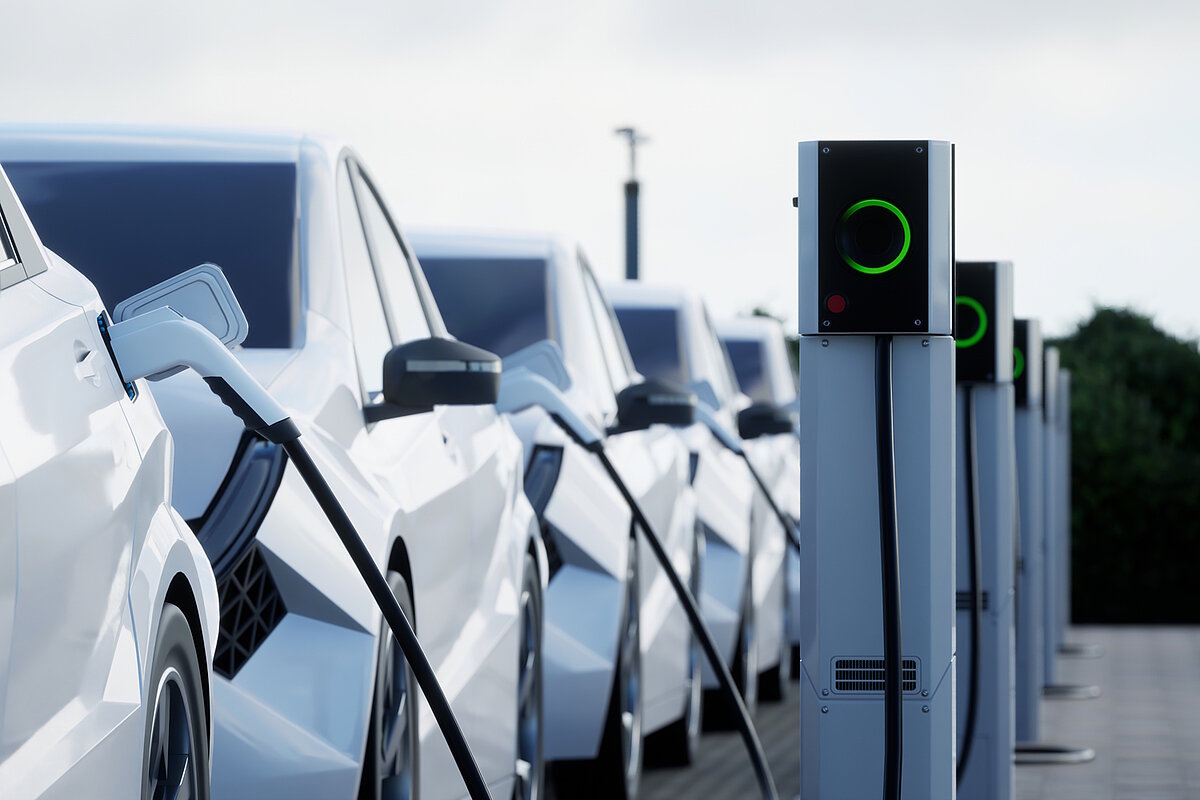
At the same time, the expansion of charging points was accelerated: As of December 1, 2025, there were 188,340 publicly accessible charging points available in Germany, including over 46,000 fast-charging points (DC). This represents a significant year-over-year increase in the total number of charging points.
Outlook for 2026
The EU fleet limits in effect since 2025 are increasing pressure on manufacturers to continue significantly reducing the emissions of their new registrations. Starting in 2025, the average CO2 emissions of a manufacturer’s new registrations will be tightened to 93.6 g CO2/km; by 2030, the limit must drop to 49.5 g CO2/km. To meet these targets, companies must incorporate significantly more battery-electric vehicles into their fleets. It is therefore likely that the market share of electric cars will continue to grow in the coming years.
Sources: KBA & Federal Network Agency